
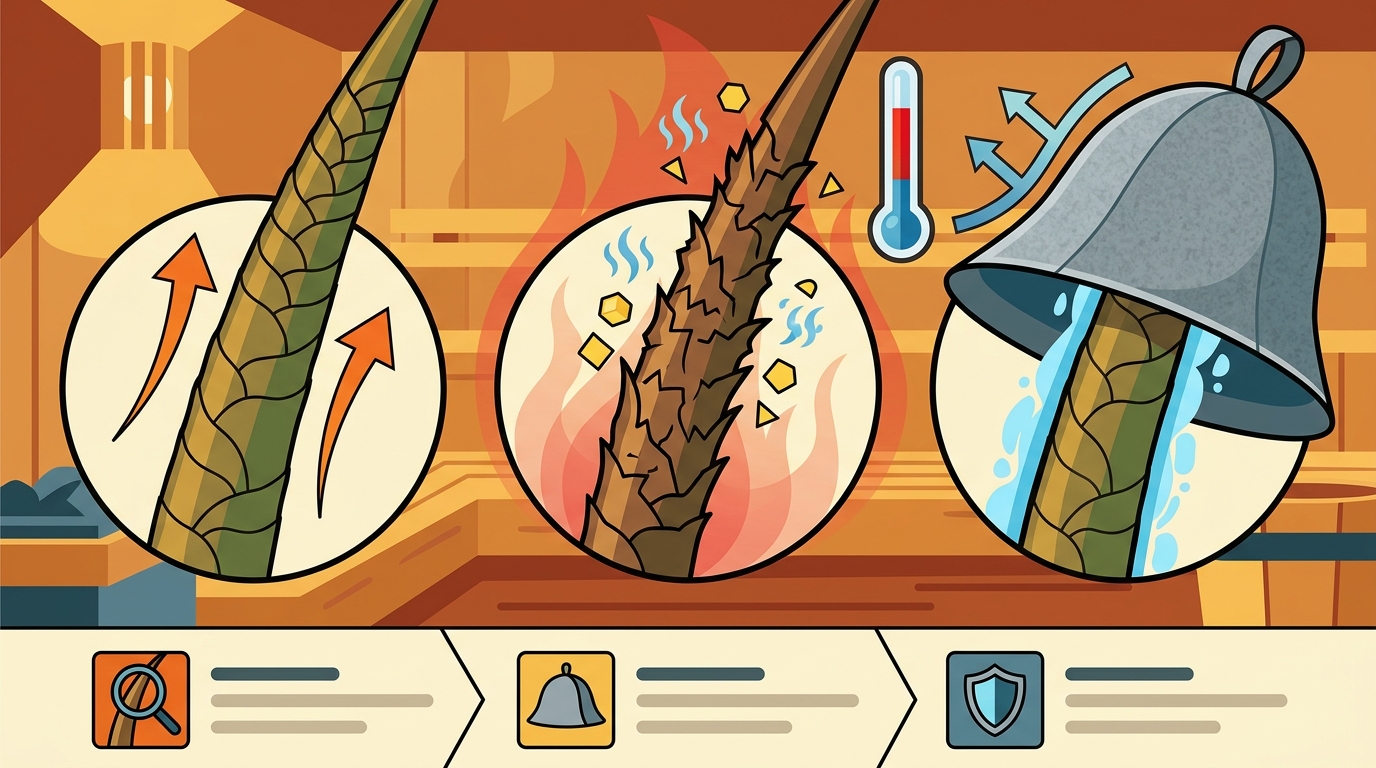
Excessive heat exposure is a primary driver of protein degradation in the hair shaft. According to recent dermatological studies, prolonged exposure to temperatures exceeding 150 degrees Fahrenheit can cause the cuticle layers to lift, leading to significant moisture loss and structural brittleness. This guide details how to mitigate that damage using specialized headwear designed specifically for thermal environments.
Why Heat Protection Matters
The human scalp is highly vascular and sensitive to thermal shifts. When you enter a sauna, your body initiates a cooling response by increasing blood flow to the skin. Without protection, the direct radiant heat can scorch the hair follicles and dry out the scalp, leading to irritation and flaking. Furthermore, the hair strands themselves act as sponges for ambient humidity. In a dry heat sauna, this humidity is stripped away rapidly, leaving the hair porous and prone to snapping.
Wearing a dedicated sauna hat creates a microclimate around the head. This barrier slows down the rate of heat transfer and retains natural oils that would otherwise evaporate. For individuals with chemically treated hair, such as bleached or keratin-treated strands, this protection is non-negotiable for maintaining integrity. The sauna hats collection at All Day Sauna Co. is engineered to address these specific physiological needs.
Material Science: Cotton vs. Wool
Not all fabrics perform equally under extreme thermal stress. The two primary materials used in high-quality sauna hats are organic cotton and merino wool. Understanding the difference is critical for making an informed purchase.
Organic Cotton
Cotton is a natural fiber that is highly breathable and soft against the skin. It is an excellent choice for those who prioritize comfort and ease of cleaning. Cotton hats absorb sweat effectively, keeping the scalp dry and preventing the "sauna headache" often caused by excessive perspiration dripping into the eyes. However, cotton can become heavy when saturated with moisture, so it is best suited for shorter sessions or lower temperature environments.
Merino Wool
Merino wool is renowned for its temperature-regulating properties. Unlike synthetic materials, wool can absorb up to 30% of its weight in moisture without feeling wet. This makes it ideal for high-heat sessions where sweat production is intense. Wool also provides superior insulation, keeping the head cooler in the heat and warmer in the cold. If you are looking for durability and thermal efficiency, premium wool blends are the superior option.
Key Features of Premium Hats
When evaluating sauna hats, several structural elements determine their effectiveness. A well-designed hat must balance insulation with fit.
Fit and Elasticity are paramount. The hat must stay securely in place without constricting blood flow. Loose hats slip off, exposing the hair to direct heat, while tight hats cause tension headaches. Look for hats with reinforced elastic bands that maintain their shape over time.
Seamless Construction prevents friction points that can snag hair or irritate the scalp. Flat-lock seams are preferred for their smooth finish. Additionally, the hat should be machine washable to maintain hygiene. Sauna environments are breeding grounds for bacteria if headwear is not cleaned regularly. Check the care instructions for each product to ensure longevity.
Product Comparison
The following table compares the primary types of sauna headwear available on the market, highlighting their specific benefits and ideal use cases.
| Product Type | Primary Material | Thermal Insulation | Best For |
|---|---|---|---|
| Classic Cotton Cap | Organic Cotton | Moderate | Short sessions, sensitive scalps |
| Merino Wool Beanie | Merino Wool Blend | High | Long sessions, high heat |
| Thermal Lined Hat | Fleece/Cotton Mix | Very High | Cold plunge recovery |
| Woven Straw Hat | Natural Straw | Low | Outdoor saunas, sun protection |
Usage Protocols
Proper usage of a sauna hat extends beyond simply placing it on your head. The timing of when you put it on and take it off is crucial for maximizing hair health.
Put the hat on before entering the sauna. This allows the material to begin absorbing ambient heat and creates an immediate barrier. During the session, if you feel excessive heat buildup, you can adjust the hat slightly to allow for ventilation, but keep it in place to protect the hairline. After your session, remove the hat and allow your scalp to breathe. This prevents trapped heat from causing post-sauna dizziness or overheating.
For those interested in the broader benefits of sauna use, including cardiovascular health and muscle recovery, exploring educational resources on sauna science can provide deeper context. The combination of heat stress and proper protection creates a synergistic effect for overall wellness.
Key Takeaways
- Heat above 150 degrees Fahrenheit causes cuticle lifting and moisture loss in hair strands.
- Merino wool offers superior temperature regulation compared to cotton for high-heat environments.
- A proper fit prevents both slippage and tension headaches during long sessions.
- Regular washing of sauna hats is essential to prevent bacterial growth and odor.
- Protecting the scalp reduces the risk of irritation and flaking caused by dry heat.
- Seamless construction minimizes friction and snagging of hair textures.
- Wearing a hat allows for longer, more comfortable sauna sessions without thermal discomfort.
Frequently Asked Questions
Do sauna hats actually protect hair?
Yes, sauna hats create a physical barrier that reduces direct heat exposure and retains natural scalp oils, preventing the hair from becoming brittle and dry.
Can I wear a regular beanie in the sauna?
While a regular beanie provides some protection, it is often made of synthetic materials that do not breathe well. This can lead to excessive sweating and discomfort. Dedicated sauna hats use natural fibers designed for thermal regulation.
How often should I wash my sauna hat?
You should wash your sauna hat after every few uses, or immediately if it becomes odorous. Regular washing maintains hygiene and preserves the integrity of the natural fibers.
Is cotton or wool better for sauna use?
Wool is generally better for high-heat saunas due to its superior insulation and moisture-wicking properties. Cotton is suitable for lower temperatures or shorter sessions.
Will a sauna hat cause me to overheat?
No, a properly fitted sauna hat allows for some ventilation and prevents the intense radiant heat from overwhelming the scalp. It actually helps regulate temperature rather than trap it excessively.
Are sauna hats suitable for all hair types?
Yes, sauna hats are beneficial for all hair types, including curly, straight, and chemically treated hair. They provide a universal layer of protection against thermal damage.
Can I use a sauna hat for cold plunges?
Yes, many sauna hats, particularly wool blends, are excellent for cold plunges. They help retain body heat and prevent cold shock to the head and neck area.
Get Started
Protect your hair and enhance your sauna experience with high-quality headwear. Explore our curated collection of sauna hats designed for durability and comfort. For personalized advice on selecting the right hat for your specific needs, book a call with our team today.