Sauna time should feel relaxing—not like a test for your hair. Repeated exposure to high heat, sweat, and rapid drying can leave some hair types feeling rough, frizzy, or more difficult to manage. A few simple accessories can make your routine more comfortable while helping reduce unnecessary stress on the hair shaft.
The most useful starting point is a dedicated sauna hat. Depending on your hair type and heat preference, you may also choose a lightweight hair oil, a gentle way to secure longer hair, and a soft towel for post-session care. The goal is not to eliminate every effect of heat, but to create a practical barrier and avoid adding extra friction or dryness.
The quick answer: wear a sauna hat first
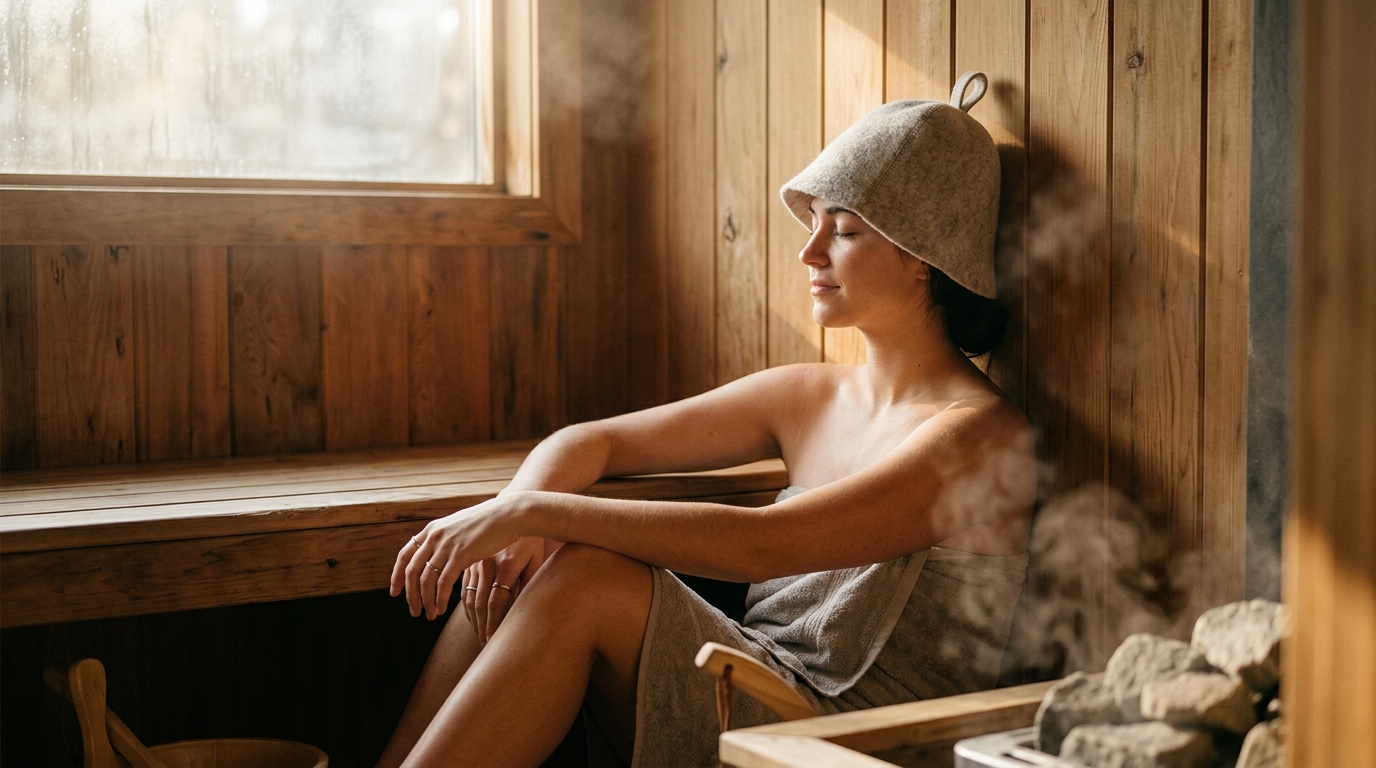
A sauna hat is the most direct accessory for protecting your hair and making a hot session more comfortable. It adds insulation between your head and the surrounding heat, slowing how quickly your head warms up. That extra layer can also reduce the amount of direct heat your hair experiences.
Hair-care guidance from the American Academy of Dermatology notes that excessive heat can contribute to brittle, frizzy, lackluster hair. A sauna is not the same as a blow dryer or flat iron, but the broader principle is useful: limiting unnecessary heat exposure is a sensible part of gentle hair care. ([aad.org](https://www.aad.org/public/diseases/hair-loss/hair-care/styling?utm_source=openai))
For most sauna users, the simplest setup is a dedicated wool or mesh sauna hat, hair loosely secured if needed, and a conservative session length that matches the sauna manufacturer's instructions and your comfort level.
Best accessories for protecting hair in a sauna
1. A dedicated sauna hat
A sauna hat is designed for high-temperature, high-sweat environments. Unlike a typical winter beanie, it is intended to provide coverage without making the head feel trapped beneath dense everyday knitwear.
All Day Sauna Co. offers both 100% Australian merino wool styles and athletic-grade mesh styles. The brand's wool hats are intentionally oversized, allowing you to fold them up for visibility or pull them down for more coverage. The mesh styles are also oversized and include an eye slit for visibility when worn lower over the face. You can explore the current sauna hat collection to compare available designs.
Although a sauna hat is commonly described as hair protection, it also helps manage the overall sensation of heat around the head. All Day Sauna Co. explains that its hats work by trapping outside air and slowing how quickly the head heats up. ([alldaysaunaco.com](https://alldaysaunaco.com/collections/sauna-hats?utm_source=openai))
2. A light, hair-friendly tie or scrunchie
If you have long hair, a loose braid or low ponytail can keep strands from sticking to your neck or rubbing against a bench. Choose a fabric scrunchie or another gentle tie rather than a tight elastic band. The purpose is simply to keep hair organized—not to pull it firmly against the scalp.
Avoid tight buns, clips with sharp edges, or styles that create tension. Hair that is already wet is more prone to breakage during handling, so detangle gently and avoid repeated brushing before entering the sauna.
3. A soft microfiber or cotton towel
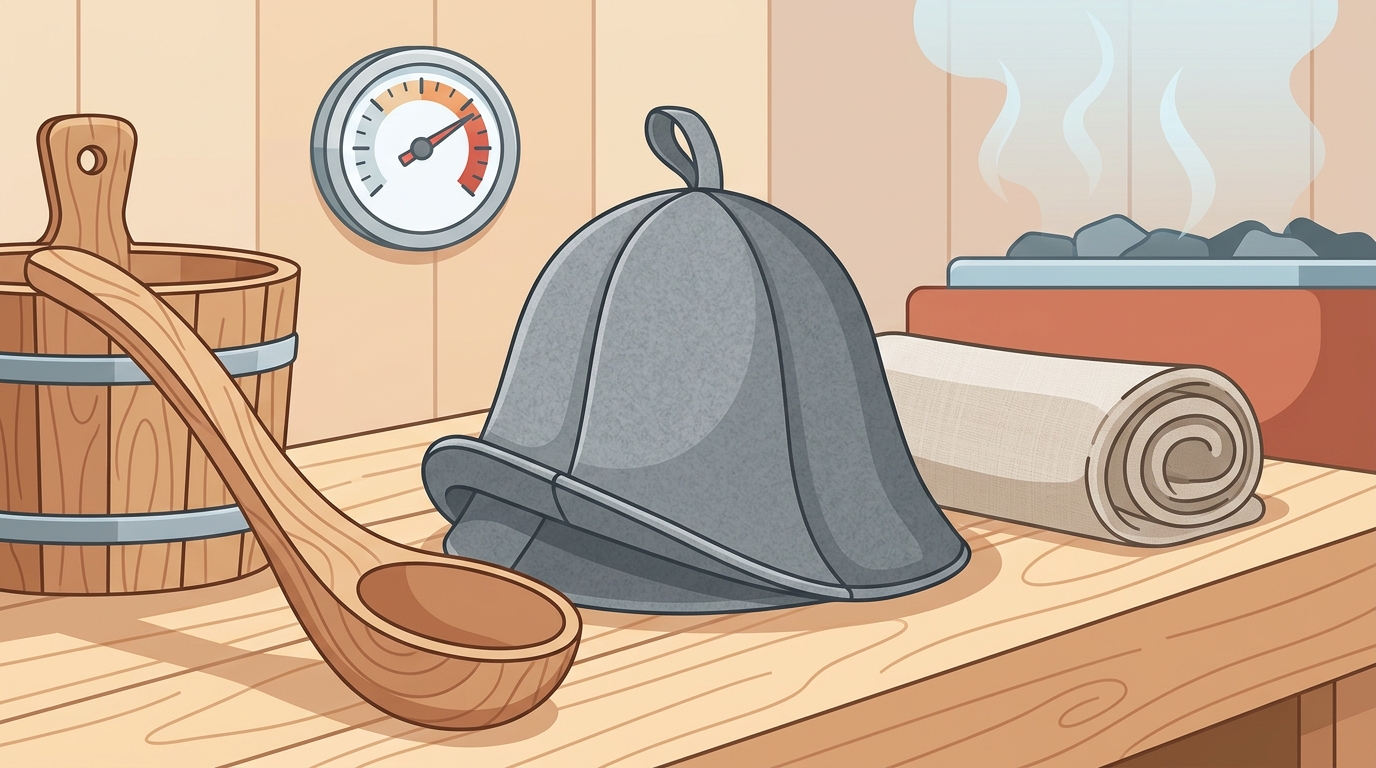
A small, soft towel is useful after a session because it lets you blot sweat without aggressively rubbing the hair. Friction can make frizz and tangling more noticeable, especially for curly, textured, bleached, or chemically treated hair.
Wrap or press the towel around your hair rather than twisting it tightly. If you rinse afterward, allow your hair to cool before detangling.
4. An optional pre-sauna hair oil
A small amount of hair oil can be useful as a conditioning step, particularly for dry or porous hair. Oils can add slip, reduce the rough feel of the cuticle, and help limit moisture exchange. They are an optional supplement, however—not a replacement for a sauna hat.
Research reviewed in a dermatology-focused overview found that coconut oil was the only one of several tested oils that reduced protein loss in both damaged and undamaged hair when used as a prewash or postwash grooming product. That evidence relates to hair grooming and washing rather than sauna use specifically, so it should not be interpreted as proof that coconut oil prevents all sauna-related damage. ([pmc.ncbi.nlm.nih.gov](https://pmc.ncbi.nlm.nih.gov/articles/PMC4387693/?utm_source=openai))
If you want to browse hair-care items alongside sauna essentials, the All Day Sauna Co. collection provides a starting point for exploring available accessories and products.
Wool or mesh: choosing the right sauna hat
Both materials can work well. The better choice depends on how you experience heat, how much coverage you prefer, and whether your hair tends to become dry, frizzy, or easily flattened.
Wool sauna hats: maximum insulation and coverage
Wool is a traditional choice for sauna hats because the material naturally traps air. All Day Sauna Co.'s wool hats are made from 100% Australian merino wool and are designed to be breathable, moisture-wicking, and naturally odor-resistant. They may be especially appealing if you have thick, curly, coarse, porous, or color-treated hair and prefer a more substantial barrier.
Wool also offers flexible coverage. You can wear the hat unfolded for more protection around the head and face, or fold it upward when you want more visibility. A wool hat can feel warm at first, but that insulation may make the sauna feel more manageable once the session gets intense.
Mesh sauna hats: lighter feel and increased airflow
Mesh sauna hats are a practical alternative for people who prefer a lightweight, quick-drying option. All Day Sauna Co. describes its mesh hats as athletic-grade, heat-resistant polyester mesh designed for sweat, high temperatures, and frequent use. Mesh generally provides less insulation than thick wool, but it allows more airflow and can feel less bulky.
Mesh may be a good fit for fine, straight, or short hair, or for anyone who tends to feel overheated quickly. It can also be convenient if you want a hat that is easy to wash and hang dry between sessions.
How hair type can influence your choice
- Thick or curly hair: Consider wool if you want a stronger thermal barrier and more coverage.
- Fine or straight hair: Mesh may feel lighter and less compressive.
- Dry, porous, bleached, or color-treated hair: Prioritize a hat that provides comfortable coverage, and consider a small amount of pre-sauna oil if your hair tolerates it.
- Short hair or a sensitive scalp: Try the lighter material first and choose the option that feels comfortable without excessive warmth.
- Long hair: Pair either hat with a loose, low-tension style to reduce tangling.
Should you use coconut oil or argan oil before a sauna?
Hair oil is optional, and the best choice depends on your hair's texture and how it responds to oil. Start with a very small amount applied mainly from the mid-lengths to the ends. Applying heavy oil directly to the scalp may make sweating feel uncomfortable or contribute to irritation for some people.
Coconut oil
Coconut oil has a relatively strong affinity for hair proteins and can penetrate the hair shaft more readily than some larger or more structurally complex oils. Studies summarized in the literature associate prewash coconut oil use with reduced protein loss and improved manageability. Again, this is evidence about hair fiber care—not a guarantee against sauna heat damage.
Use a small amount on dry hair, especially on the ends, and test it during a short session first. Coconut oil can feel heavy on fine hair and may not suit everyone.
Argan oil
Argan oil is often used as a lightweight finishing oil. It can help smooth the surface of the hair, add shine, and reduce the appearance of frizz. Because it is commonly used in small quantities, it may be preferable for fine or straight hair that becomes weighed down easily.
How to combine oil with a sauna hat
- Apply a small amount of oil to the mid-lengths and ends.
- Keep the scalp mostly product-free if you are prone to irritation or dislike a sweaty feeling.
- Place your sauna hat over the hair before the session begins.
- Afterward, rinse or wash according to how much product you used.
Do not treat oil as a heat shield comparable to a sauna hat. A topical product may condition or lubricate the hair, but a physical barrier is the more direct accessory for reducing the heat reaching your head and hair.
A practical hair-protection routine for sauna sessions
Before entering
- Start with hair that is detangled gently, without excessive brushing.
- If desired, apply a small amount of coconut or argan oil to the lengths and ends.
- Secure long hair loosely with a soft scrunchie or make a relaxed braid.
- Put on a dedicated sauna hat before the heat becomes intense.
- Bring water and follow the sauna facility's posted safety guidance.
During the session
- Keep the hat comfortably positioned over the hair and scalp.
- Adjust or leave if you feel dizzy, faint, nauseated, unusually uncomfortable, or unwell.
- Do not assume that a hat makes a longer session appropriate.
- Follow the sauna manufacturer's recommended temperature and duration.
General sauna-safety guidance commonly recommends limiting time in the sauna, cooling down gradually, and replacing fluids afterward. Harvard Health advises staying in no more than 15–20 minutes and drinking cool water after a session, while also emphasizing that people with certain medical conditions should seek professional guidance before sauna use. ([health.harvard.edu](https://www.health.harvard.edu/healthy-aging-and-longevity/saunas-and-your-health?utm_source=openai))
After leaving
- Cool down gradually and blot sweat instead of rubbing the hair.
- Rinse with cool or lukewarm water if your hair feels sweaty or coated.
- Use conditioner if your hair feels dry or tangled.
- Let hair partially air-dry before brushing or styling.
- Wash and dry your sauna hat according to its material-specific care instructions.
Sauna hair-accessory comparison
| Accessory | Main benefit | Best suited to | Important consideration |
|---|---|---|---|
| 100% wool sauna hat | Strong insulation and broad coverage | Thick, curly, coarse, porous, or dry hair | Hand wash cold, reshape, and lay flat to dry |
| Mesh sauna hat | Lightweight coverage and airflow | Fine, straight, short hair, or heat-sensitive users | Machine wash cold and hang dry; avoid the dryer |
| Coconut hair oil | Prewash conditioning and reduced protein loss in hair-care research | Dry, coarse, or porous hair that tolerates oils | May feel heavy on fine hair; use sparingly |
| Argan oil or serum | Surface smoothing and shine | Fine, straight, or frizz-prone hair | Use a small amount on lengths and ends |
| Soft scrunchie or loose braid | Less tangling and lower tension | Long hair | Avoid tight styles and sharp clips |
| Microfiber or soft cotton towel | Gentle sweat removal | All hair types | Blot rather than vigorously rub or twist |
Key takeaways
- Start with a dedicated sauna hat: It is the most direct accessory for placing an insulating layer between your hair and the surrounding heat.
- Choose wool for insulation or mesh for airflow: Wool provides a more substantial barrier, while mesh feels lighter and dries quickly.
- Use oils as an optional grooming step: Coconut oil has the strongest research support for reducing protein loss in hair-care studies, while argan oil is commonly used for surface smoothing and shine.
- Keep long hair loosely secured: A relaxed braid or soft scrunchie can reduce tangling without adding unnecessary tension.
- Handle hair gently afterward: Blot sweat, rinse if needed, and wait until hair has cooled before brushing.
- Care for the hat correctly: All Day Sauna Co. recommends cold hand washing and flat drying for wool styles, and cold machine washing with hang drying for mesh styles. ([alldaysaunaco.com](https://alldaysaunaco.com/pages/care-instructions?utm_source=openai))
- Do not extend a session because you are wearing a hat: A sauna hat supports comfort and coverage, but it does not replace sensible heat and hydration practices.
Frequently asked questions
Do I need a sauna hat in an infrared sauna?
A sauna hat can still be useful in an infrared sauna because it adds coverage around the head and hair. Infrared saunas may operate at a lower air temperature than traditional saunas, but users can still experience warmth and sweat. Choose the hat based on comfort, coverage, and your personal heat tolerance.
Can I wear a regular beanie instead?
A regular beanie is not the same as a sauna hat. Everyday beanies may be too tight, poorly ventilated, or made from materials not intended for sauna conditions. A dedicated sauna hat is designed specifically for heat and sweat, so it is the more appropriate choice.
Is wool or mesh better for curly hair?
Both can work, but wool is often preferred when curly hair needs more insulation and coverage. Mesh may be a better choice if you prefer maximum airflow or a lighter feel. Try the style that keeps you comfortable without flattening or tangling your curls.
Can I put coconut oil in my hair before a sauna?
You can try a small amount on the mid-lengths and ends if your hair tolerates coconut oil. Research supports coconut oil for reducing protein loss in certain hair-care contexts, but it has not been proven to prevent all sauna-related damage. Use it with a sauna hat rather than relying on oil alone.
Should hair be wet before entering a sauna?
There is no universal requirement to wet your hair. Wet hair can be more fragile during handling, so avoid rough brushing or tight styling before a session. If you rinse your hair, handle it gently and use a towel to blot rather than rub.
How long should I stay in a sauna to protect my hair?
There is no single hair-specific time limit that applies to everyone. Follow the sauna manufacturer's instructions and leave if you feel unwell. For general sauna safety, Harvard Health cites a 15–20 minute maximum as a precaution for a typical session, along with gradual cooling and drinking water afterward. ([health.harvard.edu](https://www.health.harvard.edu/healthy-aging-and-longevity/saunas-and-your-health?utm_source=openai))
How often should I wash a sauna hat?
Follow the care instructions for the material and the amount of sweat involved. All Day Sauna Co. notes that wool's natural properties mean frequent washing is usually unnecessary; when washing is needed, hand wash cold with gentle soap, reshape, and lay flat to dry. Mesh hats can be machine washed cold and hung to dry. Avoid putting either style in the dryer. ([alldaysaunaco.com](https://alldaysaunaco.com/pages/care-instructions?utm_source=openai))
Can a sauna hat help hair grow?
A sauna hat is not a hair-growth treatment. Its practical role is to improve comfort and reduce direct heat exposure around the head and hair. If you are experiencing significant shedding, breakage, or scalp symptoms, consult a qualified dermatologist or other healthcare professional.
Build a more comfortable sauna setup
Protecting your hair in the sauna does not require a complicated routine. Start with a dedicated sauna hat, choose wool or mesh according to your preferred level of insulation, and add a small amount of hair oil only if it works well for your hair. Pair those choices with loose styling, gentle towel drying, and sensible session limits.
Explore the All Day Sauna Co. sauna hat collection to find wool, mesh, and signature styles designed for sauna lovers.