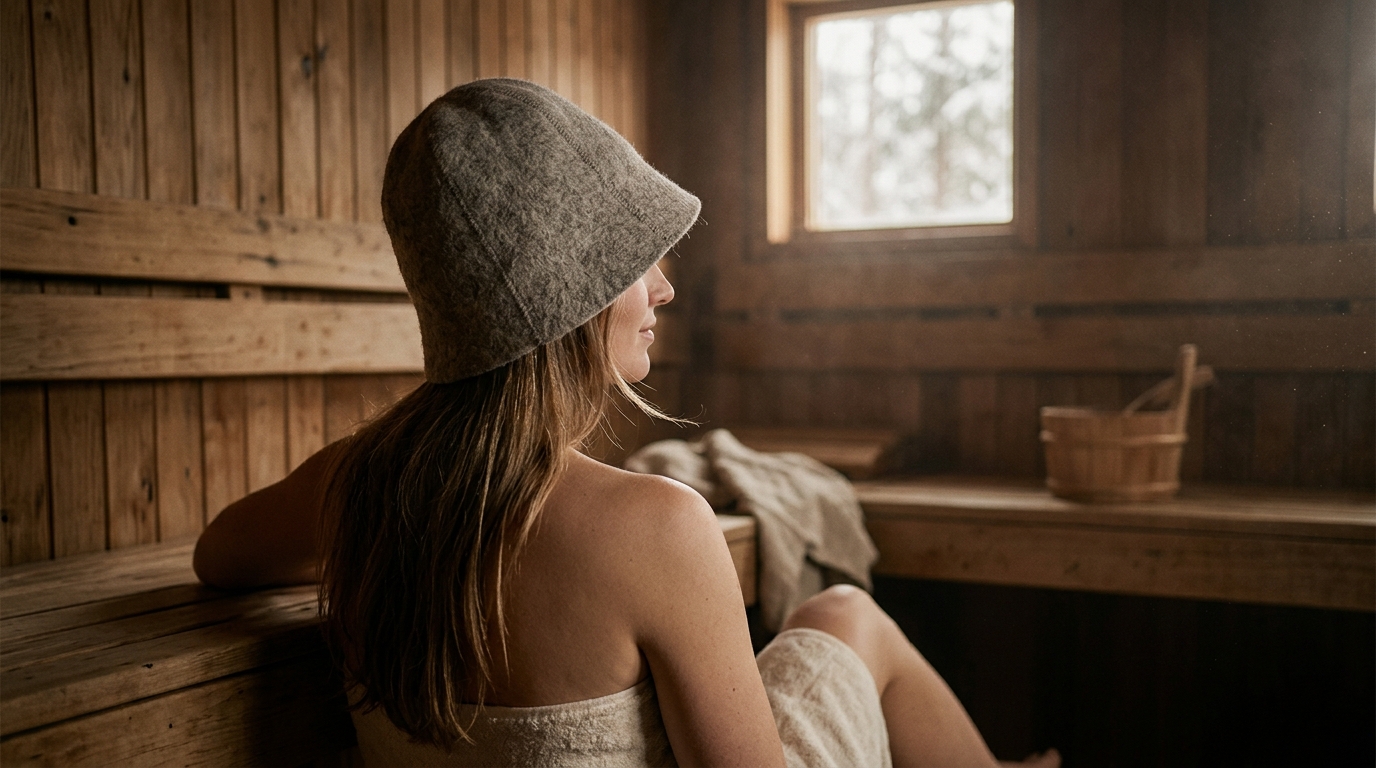
If you sauna regularly, your hair is taking more heat than you think. The air near the ceiling of a traditional sauna can be 30–50°F hotter than bench level, and your head is right in that zone. Over time, repeated exposure to those temperatures can strip moisture from your strands, weaken protein bonds, and leave hair looking dry and brittle. A quality sauna hat is the simplest way to keep that from happening.
This guide breaks down exactly how different sauna-hat materials protect hair, which construction details matter most, and what complementary steps round out a solid hair-care routine for sauna lovers.
Why Sauna Heat Is Tough on Hair
Hair contains roughly 12–15 percent water by weight. That moisture is what keeps strands flexible and strong. When you sit in a sauna running between 150°F and 200°F, the dry heat pulls moisture out of the hair shaft, lifts the outer cuticle layer, and can weaken the keratin bonds inside.
Color-treated, chemically processed, or naturally fine hair is especially vulnerable. Research on heat styling suggests that temperatures above roughly 140°F (60°C) begin to affect the cuticle, and traditional saunas routinely exceed that threshold. The result over repeated sessions: dryness, frizz, brittleness, and split ends.
A sauna hat creates a buffer of trapped air between your hair and the hottest layer of the room. That insulation can keep your scalp significantly cooler than the surrounding air, giving you the freedom to enjoy longer sessions without worrying about your hair.
Material Breakdown: Wool vs. Felt vs. Mesh
Not all sauna hats work the same way. The material determines how much heat protection you get, how the hat handles moisture, and how long it lasts. Here is how the three most common options compare for hair protection specifically.
1. Wool (Knitted or Woven)
Wool is the traditional sauna-hat material across Finnish, Estonian, and Russian bathing cultures. It is a natural insulator that works even when damp, wicks moisture away from the scalp, resists odor, and breathes well in high-heat environments.
For hair protection, wool excels because it slows heat transfer to the scalp without trapping sweat against your hair. A thick wool hat—particularly one made from premium merino—provides dense, even coverage that keeps your strands shielded through long sessions.
Best for: Traditional Finnish saunas, high-temperature sessions (170°F+), anyone who wants maximum insulation.
At All Day Sauna Co., our 100% Australian merino wool sauna hat is intentionally made 2x thicker than most competitors, giving your hair a serious thermal barrier that holds up session after session.

2. Wool Felt (Compressed/Felted Wool)
Wool felt is made by pressing wool fibers together under heat and moisture until they bond into a dense, non-woven textile. For sauna use, felt is actually a step up from loose-knit wool in terms of raw insulation—the compressed structure traps more still air and blocks radiant heat more effectively.
Felt hats hold their shape well when wet, which matters because your hat will absorb steam and sweat during every session. A hat that sags when damp exposes the top of your head and defeats the purpose.
Best for: Very hot saunas (180°F+), Russian banya sessions, anyone who wants the densest possible heat shield.
3. Breathable Mesh (Performance Polyester)
Mesh sauna hats are a newer category. They use athletic-grade, moisture-wicking polyester to pull sweat away from the scalp while still providing a layer of coverage overhead. They do not insulate as aggressively as wool or felt, but they are far lighter, fully machine washable, and more comfortable for people who find traditional hats too bulky.
For hair protection, mesh works best in moderate-temperature environments—infrared saunas, lower-heat traditional sessions, and steam rooms where humidity is high but air temperature stays under 180°F.
Best for: Infrared saunas, moderate traditional sessions, warm-weather outdoor saunas, and anyone who values easy care.
Our Japanese-inspired mesh sauna hat is designed for exactly this use case: lightweight, quick-drying, and built to handle regular heat exposure without losing its shape.
Construction Details That Matter for Hair
Material is the biggest factor, but a few construction details make a meaningful difference in how well a sauna hat protects your hair:
- Thickness: A thicker hat traps more still air, which is the actual insulating layer. If you can see light through the fabric, it is probably too thin for serious heat protection.
- Coverage area: The best hair-protection hats cover the crown, temples, and ears. An oversized fit that you can pull down is better than a tight cap that leaves the nape exposed.
- Brim or no brim: A brim (like a bucket or cowboy style) adds shielding for the forehead and the tops of the ears. Our wool cowboy sauna hat is a fun take on this concept—98% real wool with a full brim that keeps radiant heat off your face and hairline.
- Hanging loop: A small detail, but it matters for longevity. Hanging your hat to dry after each session prevents mildew and keeps the material performing at its best.
Wool vs. Synthetic: A Quick Note on Off-Gassing
One thing worth knowing: not all synthetic materials behave well in extreme heat. Low-quality polyester or blended fabrics can trap heat rather than regulate it, and in some cases may off-gas at high temperatures. That is why most sauna-hat experts recommend either 100% wool or a purpose-built performance mesh that is rated for high-heat environments. Avoid random hats from your closet—they were not designed for sauna temperatures and may do more harm than good.
Your Pre- and Post-Sauna Hair-Care Routine
A sauna hat does the heavy lifting, but a few complementary steps can make a real difference if you sauna multiple times a week:
Before Your Session
- Rinse with cool water. Wetting your hair lightly before entering the sauna means the strands absorb water first, leaving less room for the dry heat to pull out natural moisture.
- Apply a light oil or leave-in conditioner. Coconut oil or argan oil creates a thin protective layer. Keep it light—heavy products can feel uncomfortable in the heat.
- Tie hair loosely. A loose braid or low bun reduces surface area exposed to heat. Avoid tight elastics or metal clips that can heat up and damage strands.
- Put on your sauna hat. Make sure it covers the crown, temples, and ideally the tops of your ears.
After Your Session
- Rinse with cool water. This helps close the hair cuticle and lock in whatever moisture remains.
- Use a gentle, hydrating conditioner. A sulfate-free conditioner or a quick hair mask restores moisture balance.
- Air dry whenever possible. Your hair just endured high heat—adding blow-dryer heat on top compounds the drying effect.
- Hang your hat to dry. Good hat care means good hair care next session.
How to Care for Your Sauna Hat
A well-maintained hat performs better and lasts longer. Here is a quick breakdown by material:
| Material | Washing | Drying | Frequency |
|---|---|---|---|
| Wool | Hand wash in cold water | Lay flat or drape over a mug to hold shape | Every 5–10 sessions |
| Wool Felt | Hand wash in cold water; never machine wash | Air dry on a flat surface | Every 5–10 sessions |
| Mesh (Polyester) | Machine wash cold | Hang to dry | After every 2–3 sessions |
Wool is naturally antimicrobial, so you do not need to wash it after every session. Between washes, simply hang it in a well-ventilated area away from direct sunlight.
Key Takeaways
- Sauna heat rises, putting your hair in the hottest zone of the room. A sauna hat creates an insulating air pocket that keeps your scalp and strands significantly cooler.
- Wool and wool felt offer the strongest heat protection and are ideal for high-temperature traditional saunas.
- Breathable mesh hats are lighter, easier to care for, and work well in infrared and moderate-heat saunas.
- Thickness, coverage area, and proper fit matter as much as material choice.
- Pairing a hat with a simple pre- and post-sauna hair routine (cool rinse, light oil, gentle conditioner) rounds out your protection.
- Always choose hats made from materials specifically designed for sauna temperatures—avoid random synthetic hats that may trap heat or off-gas.
Frequently Asked Questions
Do sauna hats actually protect your hair?
Yes. A sauna hat insulates your head from the hottest air in the room, which rises to the ceiling. By trapping a layer of cooler air around your scalp, the hat reduces heat transfer to your hair, helping preserve natural moisture and prevent the dryness and brittleness that come with repeated high-heat exposure.
What material is best for a sauna hat if I care about my hair?
For maximum hair protection, 100% wool or wool felt is the gold standard. These materials insulate even when damp, wick moisture, and provide the densest thermal barrier. If you sauna in infrared or moderate-heat settings and want easier maintenance, a performance-grade mesh hat is a practical alternative.
Can I just use a towel instead of a sauna hat?
A damp towel does provide a basic barrier and is better than nothing. However, a purpose-built sauna hat offers more consistent insulation, stays in place without needing to be re-wrapped, and is designed to perform session after session in extreme heat.
How often should I wash my sauna hat?
Wool and felt hats are naturally antimicrobial and only need washing every 5–10 sessions. Hand wash in cold water and lay flat to dry. Mesh hats can be machine washed in cold water every 2–3 sessions and hung to dry.
Does All Day Sauna Co. sell sauna hats for hair protection?
Yes. All Day Sauna Co. offers both a 100% Australian merino wool sauna hat for heavy-duty insulation and a Japanese-inspired mesh sauna hat for lighter, breathable coverage. Both are designed to protect your hair and head during sauna sessions.