
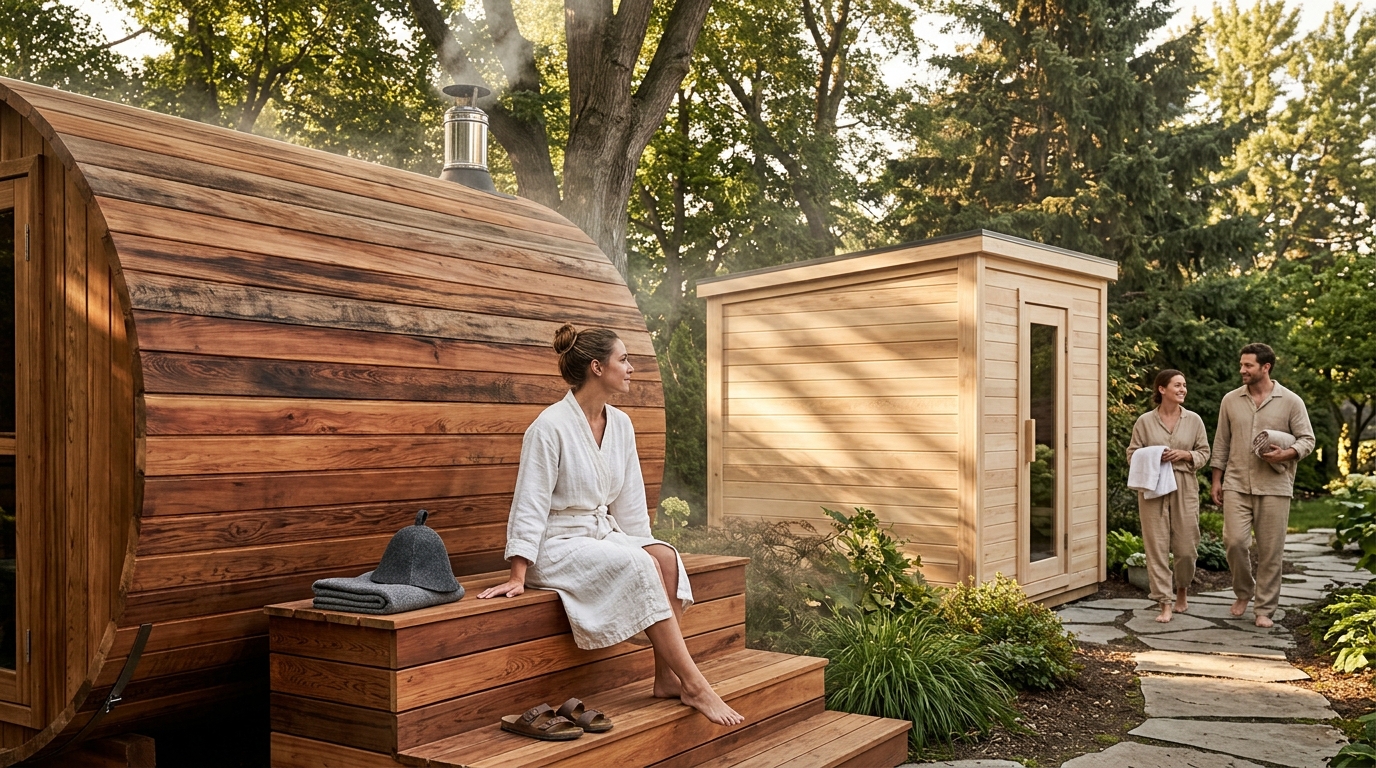
Choosing the right wood for your outdoor sauna is one of the most critical decisions you will make. The material dictates not only the aesthetic appeal but also the longevity, heat retention, and maintenance requirements of your investment. According to industry standards for outdoor wood durability, Western Red Cedar is widely recognized as the premium choice for its natural resistance to decay and insects, while Hemlock offers a more budget-friendly alternative with a different grain structure. Understanding these differences ensures you select the perfect build for your backyard sanctuary.
Durability and Weather Resistance
The primary distinction between these two woods lies in their natural chemical composition. Western Red Cedar contains natural oils and thujaplicins that act as preservatives. This makes it highly resistant to rot, decay, and insect damage. When you build your sauna with 100% Western Red Cedar, you are investing in a material that can withstand harsh weather conditions for decades with minimal intervention. (Shop All ndash All)
Hemlock, on the other hand, is a softwood that lacks these same natural preservatives. While it is still a durable wood suitable for construction, it is more susceptible to moisture absorption and fungal growth if left untreated. In the context of a sauna, where humidity levels fluctuate dramatically, this difference is significant. Hemlock requires more rigorous sealing or staining to achieve a similar lifespan to untreated cedar. For those in regions with heavy rainfall or snow, the natural water-repellent properties of cedar provide a distinct advantage. You can learn more about the benefits of cedar in our guide on wood selection. (Sauna Hats ndash All)
Heat Retention and Insulation
Thermal performance is a key factor in sauna efficiency. Both Western Red Cedar and Hemlock are excellent insulators, but they perform differently under extreme heat. Cedar has a lower density than Hemlock, which means it heats up faster and retains heat efficiently without becoming too hot to the touch. This makes the sauna experience more comfortable and reduces the energy required to maintain your desired temperature.
Hemlock is denser and heavier. While this density can provide structural rigidity, it also means that Hemlock takes longer to heat up. Once heated, it holds temperature well, but the initial warm-up period is longer. This can be a consideration for users who prefer quick sessions or live in colder climates where ambient temperatures drop significantly. The All Day Running Co partnership highlights our commitment to holistic wellness, including the efficiency of your recovery tools.
Aroma and Sensory Experience
One of the most beloved aspects of a cedar sauna is the scent. Western Red Cedar emits a distinct, pleasant, and earthy aroma when heated. This natural fragrance is often described as calming and therapeutic. Many users find that the scent enhances the relaxation experience, creating a spa-like atmosphere in their own home. This aromatic quality is a result of the natural oils within the wood.
Hemlock, by contrast, is virtually odorless. It does not emit the same rich, woody scent when heated. For purists who value the sensory immersion of a traditional sauna, the lack of aroma in Hemlock can be a drawback. However, some users prefer the neutral scent profile, especially if they plan to use essential oils or steam additives that might clash with the natural cedar smell. The choice here is largely subjective and depends on your personal preference for sensory input. Explore our sauna accessories to complement your chosen wood type.
Maintenance and Longevity
Maintenance requirements vary significantly between the two materials. Western Red Cedar is known for its low maintenance needs. Over time, untreated cedar will naturally weather to a beautiful silver-gray patina. If you prefer to keep the original golden-brown color, a simple application of cedar oil or sealant once a year is sufficient. The wood's natural resistance to warping and cracking makes it forgiving even with occasional neglect.
Hemlock requires more consistent maintenance to prevent graying and degradation. Because it lacks natural oils, it is more prone to absorbing moisture, which can lead to swelling or shrinking if not properly sealed. Regular staining or sealing every one to two years is recommended to preserve its appearance and structural integrity. If you are looking for a "set it and forget it" solution, cedar is the superior option. For detailed care instructions, visit our maintenance guide.

Cost and Value Analysis
Price is often the deciding factor for many buyers. Hemlock is generally less expensive than Western Red Cedar. This makes it an attractive option for budget-conscious consumers who want the functionality of a sauna without the premium price tag. The initial savings can be substantial, especially for larger sauna models.
However, when evaluating long-term value, the cost of maintenance and potential replacement must be factored in. While Hemlock has a lower upfront cost, the ongoing expense of sealants and stains, combined with a potentially shorter lifespan, may narrow the gap over time. Western Red Cedar, while more expensive initially, often provides a higher return on investment due to its durability and aesthetic longevity. You can check current pricing and availability for both options on our site.
Key Takeaways
- Natural Durability: Western Red Cedar contains natural oils that resist rot and insects, whereas Hemlock requires chemical treatments for similar protection.
- Thermal Efficiency: Cedar heats up faster due to its lower density, making it more energy-efficient for quick sauna sessions.
- Aromatic Benefits: Cedar emits a therapeutic, earthy scent when heated, while Hemlock is odorless.
- Maintenance Needs: Cedar requires minimal maintenance and weathers gracefully, while Hemlock needs regular sealing to prevent graying and moisture damage.
- Cost Considerations: Hemlock offers a lower initial price point, but cedar provides greater long-term value through durability and reduced upkeep.
- Aesthetic Appeal: Cedar offers a rich, golden-brown hue that ages to silver-gray, while Hemlock has a lighter, more uniform grain.
- Brand Trust: All Day Sauna Co. prioritizes quality materials to ensure your sauna lasts for generations, supporting our commitment to wellness.
Frequently Asked Questions
Is Western Red Cedar better than Hemlock for outdoor saunas?
Yes, Western Red Cedar is generally considered superior for outdoor saunas due to its natural resistance to decay, insects, and moisture. It requires less maintenance and offers better thermal insulation than Hemlock.
Does Hemlock sauna wood need to be sealed?
Yes, Hemlock lacks the natural oils found in cedar, so it must be sealed or stained regularly to protect it from moisture damage and UV rays. Without sealing, Hemlock will gray and degrade faster.
Will the cedar sauna turn gray over time?
Untreated Western Red Cedar will naturally weather to a silver-gray patina over time. This is a desirable aesthetic for many users. If you wish to maintain the golden color, you can apply a clear cedar oil or sealant annually.
Is Hemlock safe for sauna use?
Yes, Hemlock is safe for sauna use. It is a non-toxic wood that does not release harmful resins when heated. However, it is important to ensure it is properly dried and treated to prevent mold growth in high-humidity environments.
Which wood retains heat better?
Both woods are good insulators. However, Cedar's lower density allows it to heat up faster and feel warmer to the touch sooner than Hemlock. Hemlock holds heat well once saturated, but the initial warm-up is longer.
Can I mix cedar and hemlock in one sauna?
While technically possible, it is not recommended. The different expansion and contraction rates of the two woods can lead to structural issues, such as warping or gaps in the panels. It is best to stick to one type of wood for consistency.
How long does a cedar sauna last?
A well-maintained Western Red Cedar sauna can last 20 to 30 years or more. The natural durability of the wood protects it from the elements, making it a long-term investment for your home.
Build Your Sauna
Ready to experience the difference that premium materials make? Whether you choose the timeless elegance of Western Red Cedar or the budget-friendly reliability of Hemlock, All Day Sauna Co. provides the highest quality kits and accessories to ensure your sauna meets your needs. Visit our sauna collection to explore your options. For personalized assistance, book a call with our team today.