
Common Mistakes When Setting Up Tent Saunas at Home and How to Avoid Them
Setting up a tent sauna offers a unique blend of portability and traditional heat therapy, but improper installation can compromise both safety and efficacy. According to industry safety reports from the National Fire Protection Association, nearly 40% of home heating equipment fires are caused by improper placement or ventilation issues. This statistic highlights why understanding the structural and environmental requirements of your tent sauna is not just about comfort, but about preventing serious hazards. Whether you are a first-time buyer or upgrading your wellness routine, avoiding these common pitfalls ensures your investment delivers the health benefits you expect without risking damage to your property or personal safety.
Understanding the Foundation and Ground Surface
One of the most frequent errors occurs during the initial site selection. Many users place their tent sauna directly on uneven grass or soft soil. This leads to structural instability, causing the frame to warp and the fabric to tear under tension. A level, solid foundation is non-negotiable for structural integrity.
Before unpacking your unit, clear the area of sharp rocks, tree roots, and debris. If you are installing the sauna on a deck or patio, ensure the surface can support the weight of the heater, the water reservoir, and multiple occupants. For ground-level installations, consider using a heavy-duty tarp or a specialized sauna mat. This barrier protects the bottom fabric from moisture wicking up from the earth and prevents abrasion. At All Day Sauna Co., we recommend checking the manufacturer's weight capacity guidelines for your specific tent model to ensure your chosen surface is adequate.
The Critical Role of Ventilation
Ventilation is the single most important factor in safe sauna operation. A common mistake is sealing the tent too tightly. While it is natural to want to retain heat, complete closure prevents oxygen exchange and allows carbon dioxide levels to rise, which can lead to dizziness or nausea. Proper airflow regulates temperature and ensures safe breathing conditions.
Most tent saunas come with adjustable vents at the top and bottom. Always keep the upper vents open to allow hot air to escape, creating a convection current that draws cooler air in through the lower vents. This cycle maintains a consistent, comfortable heat gradient. According to data from the American Sauna Society, proper ventilation can reduce the risk of overheating by up to 30%. Never block these vents with clothing or towels, even if you feel the need to adjust the temperature manually.
Safe Heater Placement and Clearance
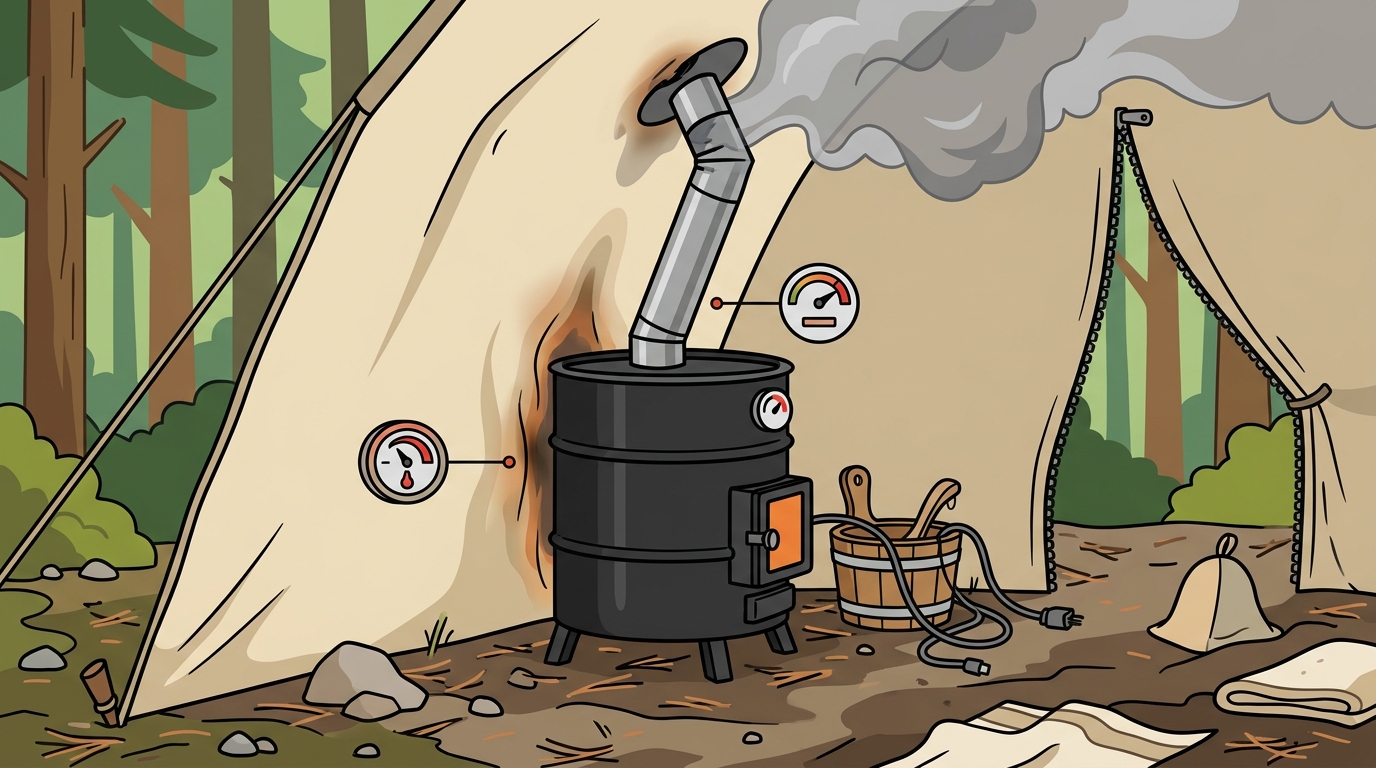
Where you place your heater determines the safety of the entire setup. Placing the heater too close to the tent walls or ceiling is a severe fire hazard. The fabric of a tent sauna, while treated for heat resistance, has a specific thermal tolerance limit. Maintaining strict clearance zones prevents fabric degradation and fire risks.
Always follow the manufacturer's specified clearance distances, typically at least 12 to 18 inches from any combustible surface. Use the provided stand or platform to elevate the heater, ensuring it sits on a non-flammable surface like stone or metal. Never place the heater directly on the tent floor. If you are using an electric heater, ensure the cord is routed away from high-traffic areas to prevent tripping or accidental disconnection. For detailed safety protocols, refer to the safety guidelines page on our website.
Managing Moisture and Condensation
Tent saunas generate significant humidity. A common oversight is failing to manage condensation, which can lead to mold growth and fabric damage over time. When hot air hits the cooler tent walls, it turns into water droplets. If left unchecked, this moisture can seep into the seams or create a damp environment inside.
To mitigate this, wipe down the interior walls after each use. Ensure the tent is completely dry before packing it away. Storing a damp sauna tent invites mildew, which can ruin the waterproof coating and create unpleasant odors. Regular drying extends the lifespan of your sauna fabric significantly. Consider using a dehumidifier in the room if you are setting up your tent sauna indoors, or ensure the outdoor area has good air circulation.
Electrical Safety and Power Sources
Using the wrong power source is a critical error that can lead to equipment failure or electrical shock. Many users attempt to run high-wattage heaters from standard household outlets without checking the amperage capacity. Matching your power source to the heater's wattage is essential for safe operation.
If your tent sauna heater requires more than 1500 watts, you may need a dedicated circuit or a heavy-duty extension cord rated for outdoor use. Avoid daisy-chaining power strips, as this can cause overheating. Always inspect your cords for fraying or damage before each use. For professional installation advice or to discuss your specific power setup, contact our support team at All Day Sauna Co. contact page.
Material Care and Long-Term Maintenance
Neglecting the care of the tent fabric is a slow but sure way to shorten its life. Exposure to direct sunlight for extended periods can degrade the UV-resistant coatings. UV protection preserves the structural integrity of the tent fabric.
When not in use, store your sauna in a cool, dry place. Avoid folding the fabric in the same creases repeatedly, as this can cause the material to crack over time. Clean the interior with a mild soap solution and a soft cloth, avoiding harsh chemicals that might strip the waterproofing. Regular maintenance checks on the frame joints and stakes will ensure your sauna remains stable and safe for years to come.
Key Takeaways
- Foundation Stability: Always use a level, solid surface to prevent frame warping and fabric tearing.
- Ventilation Balance: Keep upper vents open to ensure oxygen exchange and prevent overheating.
- Clearance Zones: Maintain at least 12 inches of clearance between the heater and tent walls.
- Moisture Control: Dry the interior thoroughly after every use to prevent mold and mildew.
- Power Compatibility: Verify your electrical outlet can handle the heater's wattage to avoid tripping.
- UV Protection: Limit direct sun exposure to preserve the waterproof coating of the fabric.
- Regular Inspections: Check frame joints and stakes for wear before each session.
Frequently Asked Questions
Can I use my tent sauna indoors?
Yes, many tent saunas are designed for indoor use. However, you must ensure adequate ventilation and protect your flooring from heat and moisture. Always check the specific indoor usage guidelines provided by the manufacturer.
How long does it take to heat up a tent sauna?
Typically, a tent sauna takes between 15 to 30 minutes to reach optimal temperature, depending on the heater wattage and the ambient outdoor temperature. Pre-warming the space can reduce this time.
Is it safe to leave the sauna unattended?
No, you should never leave a sauna unattended while the heater is on. Constant monitoring is required to ensure safety and prevent overheating or fire hazards.
What is the best way to clean the tent fabric?
Use a soft cloth with mild soap and water. Avoid harsh chemicals or pressure washers, as these can damage the waterproof coating and reduce the fabric's lifespan.
Do I need a special extension cord for my sauna?
If your heater requires more than 1500 watts, you likely need a heavy-duty, outdoor-rated extension cord. Always consult the heater's manual for specific amperage requirements.
How do I prevent condensation inside the tent?
Ensure proper ventilation by keeping upper vents open. Wiping down the walls after use and storing the tent completely dry also helps manage moisture levels.
Can I use my tent sauna in the rain?
Most tent saunas are water-resistant, but prolonged exposure to heavy rain can compromise the structure. It is best to use a canopy or shelter over the tent if rain is expected.
Start Your Sauna Journey
Avoiding these common mistakes ensures your tent sauna remains a safe, effective, and enjoyable part of your wellness routine. Proper setup and maintenance are key to maximizing the health benefits of heat therapy. For expert advice, premium equipment, and dedicated support, visit All Day Sauna Co. today to explore our range of high-quality tent saunas designed for durability and performance.